Zack Longboy
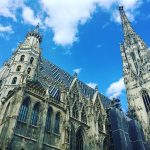
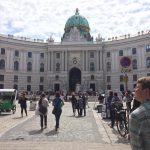
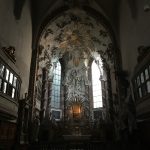
As I sit in Besir Ceka’s favourite internet café, tucked between the usual Viennese collection of pastel-coloured apartments and seemingly incongruous Baroque, Gothic and post-Modern architecture, I find myself with even more questions about migration than when I began. This is not to say that the trip up to now has been in vain, but rather quite the opposite. In fact, our discussions at IOM, the museum of film, with professor’s Heslin and Deckard and our brief look into Vienna’s Jewish history have exposed new concepts related to migration and I have gained a new appreciation for and honed my macro understanding of the social constructions and politicization surrounding migration. However, while the bigger picture of migration, in a historical, social and cultural context has become more lucid, answers to the issues I highlighted in my pre-trip reflection or followed in an academic setting at Davidson, are no more apparent.
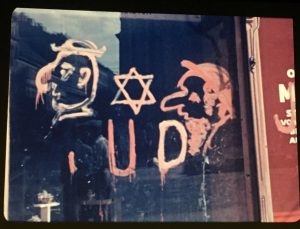
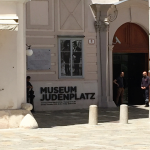
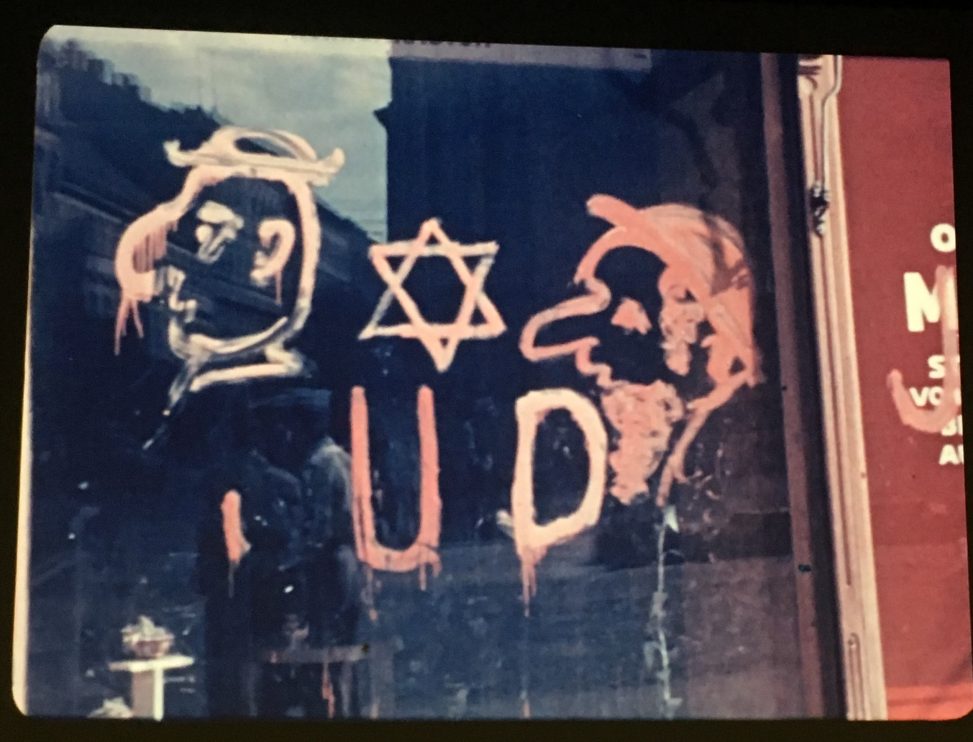
There have emerged two important and ever-themes that seem to tie together Austrian (and in a larger sense, global) migration: contradiction and self-fulfillment. The first begins with a historical facet of Austrian culture, the prickly relationship with the Holocaust. Our visit to the Judenplatz Museum shed more light on this difficult history – commemorating, among other aspects, the vast population of Vienna who, having survived the Holocaust, refused to return to Vienna due to either a strong emotional reaction to a physical place where their mothers, fathers brothers or sisters were killed, or deliberate political and economic repression by the Austrian government during the immediate post-war period. I found it interesting, although perhaps not deliberate in any sense, that although there was emphasis on this idea of returning Jews, the exhibit on the Holocaust itself was brief and under-emphasized and our guide focused mainly on the historical roots of previous Austrian-Jew settlements. It seemed to suggest, even in contemporary Austria and even among professionals who deal with these issues on a daily basis, that this history of the Holocaust is still among a list of taboo subjects.
The self-fulfilling nature of the way we talk about or delineate different types of migrants was excellently teased out in our discussion with professors Heslin and Deckard. One of the most compelling and valuable events of our trip so far, I found the discussion of the migrant spectrum and our social construction of certain terms like ex-patriot and refugee to be particularly enlightening. It was refreshing to have the idea that the differences between migrant, ex-patriot and refugee (although important to note, this has become a legal term, arguably as a result of our social construction) and the spectrum one which we view them are little more than social constructions and the lines which we use to separate these groups are arbitrary. This discussion for me personally, as a self-proclaimed ex-pat, has led me to question my own self-distinction. I had always understood, without much thought, a distinct difference between me and the heavy “immigrant” population surrounding me, but this discussion has forced me to confront the question of what makes me an ex-pat? Furthermore, the idea that statelessness and rights are directly tied to market position or financial standing was an idea that seemed obvious, but one I had yet to hear expressly stated.
The self-fulfilling nature of how out-groups are created or groups are “othered” was also present in our brief historical survey of Jewish history at the Judenplatz. From medieval times, Jews were excluded from partaking in the economic activities of 90 percent or so of the population – these being farming or artisanal careers. They were forbidden to hold land or be members of guilds. This exclusion while politically expedient was also important in that it forced Jews to partake in businesses such as usury or other money-based professions, of which many Catholics were suspicious. While the narrative that Jews were “othered” because of their widespread participation in these economic activities is dominant, the historical backing of how they were forced to make this separation is less so. Our look at the medieval origins of this exclusion is both mirrored in contemporary exclusion through market standing of other minorities (see: Turkish guest workers or low-income Mexicans in the United States) and important for discussing Austria’s tumultuous relationship with its Jewish population.
My final thought from our activities so far is entirely unrelated, but an idea that I found so compelling that I would be remiss to exclude it from my reflection. In the discussion at IOM, there was a brief but important detail that the lecturer mentioned: in the cultural knowledge programs which IOM runs, the refugees from Syria and other war-torn states often show a heavy interest in the history of the world wars. A possible explanation for this is the hope which the European narratives provides: the affluence, peace, and success of the European content give them hope that one day the conditions in their home region will ameliorate. A look at the state of Europe today, emerging from the war-torn period of the two world wars is, in a sense, light at the end of the tunnel for these refugees.
On a personal level, and for my understanding of the macro-level discussion of migration, the first half of this trip has been influential. Yet, as I mentioned previously, I have by no means come to any definitive answers to the questions I set out to address. Instead, I have been forced to further hone the questions I am asking as new concepts and ideas relating to migration have emerged. Going forward, I hope to analyze our future discussions with an eye on the idea of self-fulfilling social constructions and how they manifest themselves.
[image1.JPG]